





Palliative care postcode lottery must end, warns Hospice Alliance NI, as demand set to surge


The postcode lottery in access to hospice and palliative care across Northern Ireland must end, Hospice Alliance Northern Ireland (HANI) has warned today, as it launches a new vision for the future of hospice care and calls for urgent Government action to ensure people receive the care they need, regardless of where they live.
The four hospice charities that make up HANI – Evora Hospice Care, Foyle Hospice, Marie Curie Northern Ireland, and Northern Ireland Hospice (including Northern Ireland Children’s Hospice) – were joined by healthcare professionals, policymakers, palliative care patients and their families at Parliament Buildings, Stormont, for the launch of With The End In Mind: Delivering equitable, quality and sustainable hospice care for Northern Ireland.
The report warns that maintaining the status quo is no longer an option, with access to care varying according to geography, diagnosis, service availability and how people enter the health and social care system.
HANI is calling for Government, commissioners and the wider Health and Social Care system to act quickly to address these inequalities and ensure access is based on need – not postcode or circumstance.
Economic analysis commissioned by HANI estimates that up to 19,000 people could benefit from palliative care each year by 2036, almost 17% more than in 2024. This comes against existing unmet need, with UK-wide research indicating that around one in three people who die have unmet palliative care needs1.
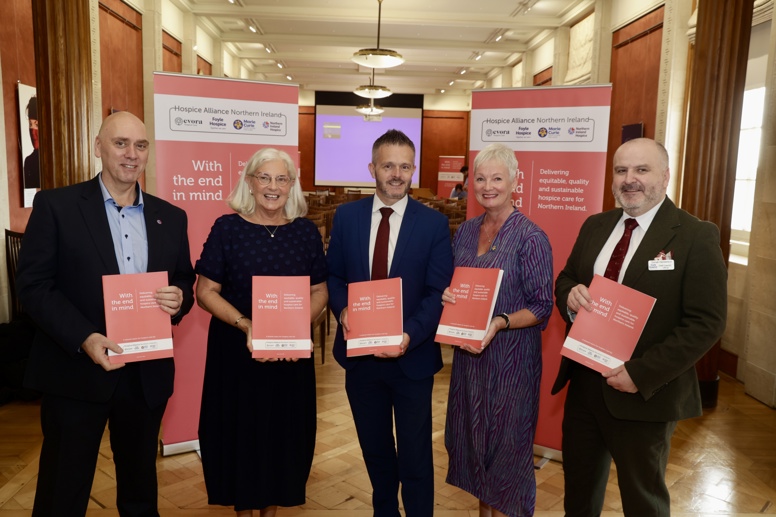
Pictured are Trevor McCartney, Chief Executive of Northern Ireland Hospice and Chair of Hospice Alliance Northern Ireland; Liz Cuddy, Chief Executive of Evora Hospice Care, and Vice Chair of HANI; Minister for Health Robbie Butler MLA; Heather Monteverde, Managing Director of Marie Curie Northern Ireland; and Donall Henderson, Chief Executive of Foyle Hospice.
Trevor McCartney, Chief Executive of Northern Ireland Hospice and Chair of Hospice Alliance Northern Ireland, said: “Nobody should have to live in one part of Northern Ireland rather than another to receive the hospice and palliative care they need. Yet access can vary according to where people live, their diagnosis and how they enter the system.
“This report is about changing that – ensuring every person and family has the same opportunity to receive high-quality, compassionate care. We already have examples of excellent practice across Northern Ireland. Now we need to learn from what works and make equity the standard everywhere.”
The report argues that hospice care must be recognised as an essential part of Northern Ireland’s Health and Social Care system, rather than viewed primarily as a charitable service. Hospices currently provide care to around 13,000 people each year, with 72% of care delivered in people’s own homes.
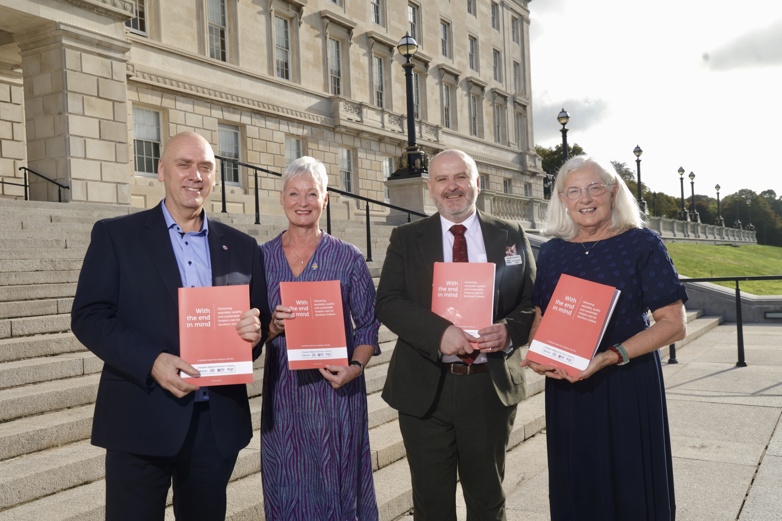
Pictured are Trevor McCartney, NI Hospice CEO and Chair of HANI; Heather Monteverde, Managing Director of Marie Curie NI; Donall Henderson, Chief Executive of Foyle Hospice; and Liz Cuddy, Chief Executive of Evora Hospice Care, and Vice Chair of HANI.
Liz Cuddy, Chief Executive of Evora Hospice Care, said: “Hospice care is not an optional extra. It is an essential part of the support people need when living with a life-limiting illness, while also supporting families and the wider health service.
“We need a sustainable partnership between hospices and the Health and Social Care system – one that reflects the complexity, quality and value of the care we provide. Hospices provide high-quality specialist care and represent excellent value for money. Even after taking current statutory funding into account, the additional cost could reach £27.2 million annually. That’s why we need a sustainable, long-term partnership that secures hospice care for the future.”
The report identifies five priorities for action, under three connected pillars of equity, quality and sustainability:
- Ensuring equitable access for all – reducing unwarranted variation and ensuring care is based on need.
- Expanding care closer to home – increasing high-quality palliative care in people’s homes and communities.
- Workforce capacity and capability – developing the skilled workforce needed to meet growing demand.
- Sustainable funding and commissioning reform – creating a fairer model that recognises hospice care as essential health and social care capacity.
- Leadership, partnership and innovation – strengthening collaboration across hospices, Government, commissioners and the wider Health and Social Care system.
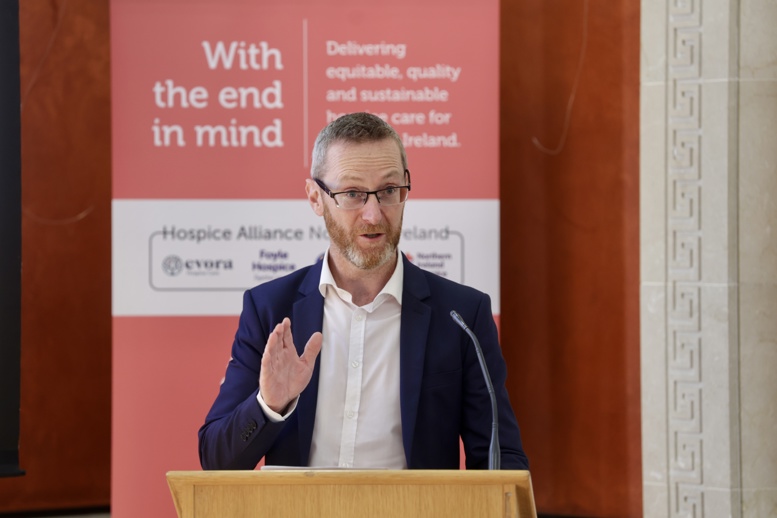
Philip McGuigan MLA, Chair of the Health Committee, gave the opening and closing remarks, and also sponsored the event.
Heather Monteverde, Managing Director of Marie Curie Northern Ireland, said: “People living with life-limiting illnesses should not have to reach crisis point before they receive the care they need.
“Recent research commissioned by Marie Curie into unscheduled care in Northern Ireland shows how gaps in community support can leave families with little option but to turn to ambulances and hospitals at their most difficult moments. Too often, this leads to additional distress for patients and their loved ones, while also placing avoidable pressure on our already stretched emergency services.
“A neighbourhood model of care offers a different future, bringing hospice, primary care, community health services and social care together around the person. By expanding high-quality palliative care closer to home and ensuring people can access support at the point their needs begin to change, we can help more people receive expert care where they want it most, reduce pressure on acute services, and ensure access to care is determined by need, not postcode.”
Donall Henderson, Chief Executive of Foyle Hospice, said: “Northern Ireland is facing a growing palliative care challenge. More people are living longer with complex, progressive and life-limiting conditions, while too many people are not getting the support they need, when they need it. We cannot allow the gap between need and provision to widen. Government must act quickly to address inequity and create a sustainable funding and commissioning model for hospice and palliative care.
“This report is not simply another call for more money. It is a shared vision for change. Every person in Northern Ireland should have access to the right care, at the right time and in the right place. Where you live should not determine the care you receive.”
The report builds on recent policy developments, including the 2025 Committee for Health Inquiry into Palliative Care Services and the Department of Health’s Health and Social Care Reset Plan.
The HANI report, With The End In Mind: Delivering equitable, quality and sustainable hospice care for Northern Ireland, is available at www.hospiceallianceni.org/vision-report
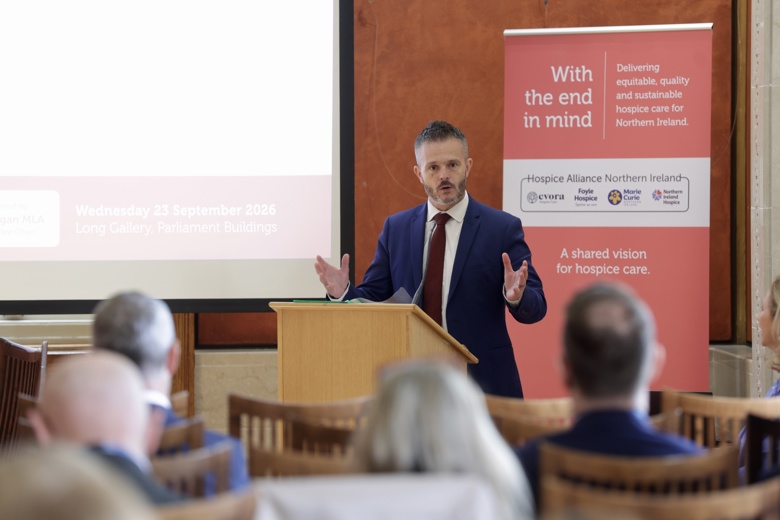
The Minister for Health, Robbie Butler MLA, also addressed the audience at the event, which was hosted in the Long Gallery at Parliament Buildings, Stormont.


Related News


Sign up for our CONNECT newsletter

